INTRODUCTION
IGNEOUS PETROLOGY: RIFT ZONE VOLCANISM
INTRODUCTION
Rift zone volcanism is one of the most fascinating and dynamic processes in igneous petrology.
It refers to volcanic activity that occurs along zones of lithospheric stretching, where the Earth’s crust and upper mantle are pulled apart due to tectonic forces.
These rift zones are characterized by crustal thinning, high heat flow, and the ascent of magma from the mantle to the surface.
Rift volcanism plays a vital role in plate tectonics, crustal generation, and the transfer of material and energy between the Earth’s interior and surface.
DEFINITION AND CONCEPT
Rift zone volcanism can be defined as the process of magma generation, ascent, and eruption within zones of lithospheric extension.
These zones develop where tectonic plates diverge, allowing decompression melting of the mantle to occur.
The process results in the formation of new crust, typically of basaltic composition, although more evolved compositions such as rhyolite or trachyte may appear in advanced stages.

GEOLOGICAL SETTING
Rift zone volcanism occurs in two main tectonic settings:
Continental rifts.
Oceanic rifts.
In continental rifts, such as the East African Rift System, the continental crust is stretched and thinned, leading to the emplacement of large volumes of basaltic magma and the development of grabens, fissures, and volcanic cones.
In oceanic rifts, particularly at mid-ocean ridges like the Mid-Atlantic Ridge, new oceanic crust forms continuously as magma rises, cools, and solidifies at spreading centers.
These settings represent the primary sites of crustal accretion on Earth.
FORMATION AND MAGMA GENERATION
The fundamental mechanism driving rift volcanism is decompression melting of the mantle.
As the lithosphere is pulled apart, the underlying asthenosphere rises to fill the gap.
The reduction in pressure during this ascent allows the mantle rocks to partially melt, forming basaltic magma.
The produced magma is typically low in viscosity, mafic in composition, and rich in iron and magnesium.
However, continued magmatic differentiation and crustal assimilation may lead to more evolved rock types such as andesite or rhyolite in continental settings.
STRUCTURAL FEATURES OF RIFT ZONES
Rift zones are characterized by distinctive structural and volcanic features including:
Fissure systems and dykes:
Linear fractures through which magma ascends to the surface.
Shield volcanoes and fissure eruptions:
Common in oceanic rifts, such as those in Iceland.
Grabens and horsts:
Block-faulted structures formed due to crustal stretching.
Volcanic cones and calderas:
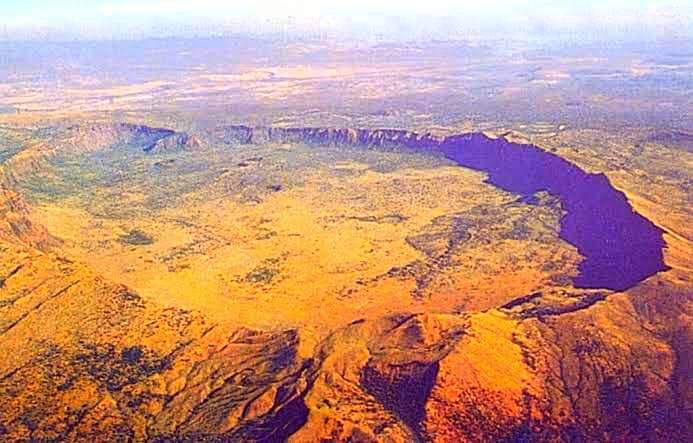
Found in continental rift settings where magma chambers evolve and collapse.
Lava plateaus: Broad, flat surfaces formed by successive basaltic flows.
PETROGRAPHIC AND GEOCHEMICAL CHARACTERISTICS
The rocks produced by rift zone volcanism are typically tholeiitic basalts, though alkaline basalts are also common in continental rifts.
These rocks contain primary minerals such as olivine, pyroxene, plagioclase, and minor magnetite or ilmenite.
Chemically, they show depletion in incompatible elements in mid-ocean ridge basalts (MORB) and enrichment in continental rift basalts (CRB).
Geochemical analysis through X-ray fluorescence (XRF), inductively coupled plasma mass spectrometry (ICP-MS), and electron microprobe techniques are used to interpret their source characteristics and magmatic evolution.
EVOLUTION OF RIFT ZONE MAGMATISM
Rift volcanism evolves through several stages:
Initial rifting stage:
Fractures and small volcanic centers appear as crust begins to extend.
Active rifting stage:
Extensive fissure eruptions occur, generating large volumes of basaltic lava.
Advanced rifting and crustal thinning:
The continental crust may rupture completely, giving rise to oceanic spreading centers.
Post-rift magmatism:
After rifting ceases, residual magmatic activity may continue in the form of isolated volcanic eruptions.
MODERN TECHNOLOGIES IN RIFT VOLCANO STUDIES
Recent advancements have significantly improved the study and monitoring of rift zone volcanism.
Technologies such as:
Remote sensing and satellite imagery (Landsat, Sentinel, MODIS) help map lava flows, fissures, and thermal anomalies.
Geographic Information Systems (GIS) enable spatial analysis of rift structures and volcanic hazards.
Global Navigation Satellite System (GNSS) and InSAR (Interferometric Synthetic Aperture Radar) are used to detect crustal deformation and magma movement beneath rift zones.
Seismic tomography and magnetotelluric surveys reveal subsurface magma chambers and melt distribution.
Geochemical modeling software (MELTS, Petrolog3) simulate magmatic differentiation processes.
These tools enhance our understanding of rift zone dynamics, hazard prediction, and crustal evolution.
PRACTICAL APPLICATIONS
Rift zone volcanism has several practical implications:
Geothermal Energy:
Rift zones host significant geothermal systems due to their high heat flow.
Countries like Kenya and Iceland exploit these for renewable energy production.
Mineral Resources:
Rift-related magmatism can concentrate valuable elements such as nickel, copper, titanium, and rare earths.
Natural Hazard Assessment:
Understanding rift volcanism aids in forecasting eruptions, seismic events, and ground deformation.
Crustal Evolution Studies:
Rift zones provide insights into the processes of continental breakup and ocean basin formation.
Environmental and Land Use Planning:
Mapping rift structures helps mitigate risks associated with volcanic gases, lava flows, and land subsidence.
CASE STUDIES
East African Rift System (EARS):
Extends from the Afar Triangle in Ethiopia through Kenya to Mozambique.
It represents a continental rift where active volcanism and tectonic extension coexist.
Notable volcanoes include Mount Nyiragongo, Mount Kenya, and Erta Ale.
Icelandic Rift Zone:
Located on the Mid-Atlantic Ridge, Iceland offers an exposed example of oceanic rifting with frequent eruptions such as the 2014–2015 Holuhraun fissure eruption.
Basin and Range Province (USA):
Exhibits crustal stretching and rift-related volcanism in a continental setting.
ENVIRONMENTAL IMPACTS
While rift volcanism contributes to crustal growth, it also poses environmental challenges.
Eruptions release gases such as CO2 and SO2, affecting air quality and climate.
Lava flows may alter landscapes, destroy habitats, and disrupt human settlements.
However, rift zones also create fertile soils and geothermal potential, supporting agriculture and sustainable development.
CONCLUSION
Rift zone volcanism is a cornerstone of igneous petrology and global tectonics.
It illustrates how the Earth’s lithosphere evolves through extension, magmatism, and crustal renewal.
The study of these volcanic systems integrates field observations, laboratory analysis, and modern geophysical technologies to unravel the complex interplay between tectonics and magmatism.